One-time general pest treatment
Best for a single flare-up, a move-in fresh start or a home you are preparing to sell. It covers inside and outside, but nothing stops new insects from moving in from the yard later.
Quarterly and one-time home pest control for roaches, ants, spiders, silverfish, earwigs, crickets and other everyday invaders.
Fastest: call (281) 326-6212. Or send this and we call you back.
Pest control in Magnolia is a plan of inspection, sealing and targeted treatment that keeps roaches, ants, spiders, silverfish, earwigs and crickets out of your home. Magnolia Pest Control serves homes across Montgomery County with one-time visits or quarterly plans, explains the price before treatment and leaves a written report after every visit.

Most homes in Magnolia share their yard with insects that would like to come inside. Summer heat drives some toward air-conditioned rooms, heavy rain floods others out of the soil, and a good pest plan works with those patterns instead of spraying blindly.
Magnolia Pest Control follows integrated pest management (IPM), the approach the EPA promotes: find out which pest you have and why it is there, remove what attracts it, block the way in, and only then treat where the pest actually lives. When the problem turns out to be something specialized, such as subterranean termites or a German cockroach infestation, we tell you plainly and quote that work separately.
Most houses in Magnolia do well with a general pest treatment every three months. That schedule follows the seasonal shifts in Southeast Texas, when ants surge in spring, roaches move indoors during summer heat and storms, and spiders and crickets look for shelter in fall. Homes backing onto woods sometimes need extra attention.
Outdoor residual products break down under sun, sprinklers and rain, so a quarterly visit refreshes the barrier before it fades and gives the technician a regular look at the slab.
Integrated pest management, or IPM, means solving the cause of an infestation rather than just spraying. A technician identifies the pest, removes its food, water and shelter, seals entry points, and then applies the most targeted treatment that works, such as bait in a crack instead of a broad spray across living areas.
In practice, IPM often means small fixes you can make yourself: trimming shrubs off the siding, moving firewood away from the house and pulling mulch back from the foundation.
A general pest plan usually covers common crawling insects: American and smokybrown cockroaches, most nuisance ants, spiders, silverfish, earwigs, crickets, pillbugs and millipedes. Termites, bed bugs, German cockroaches, rodents, mosquitoes and lawn-wide fire ant work need different methods and are normally priced separately, so ask what a plan includes before signing up.
Some ants need special handling. Tawny crazy ants, found in parts of the Houston region, often need dedicated baits and more frequent visits, while fire ants in the lawn respond best to a broadcast bait program rather than a perimeter spray.
Texas requires pest control businesses to be licensed by the Texas Department of Agriculture's Structural Pest Control Service. You can ask any company for its TDA business license number and look it up with the department. The people applying treatments in your home must also hold TDA credentials appropriate to their role.
It is also reasonable to see the label of anything applied in your home and to get a written record of each treatment.
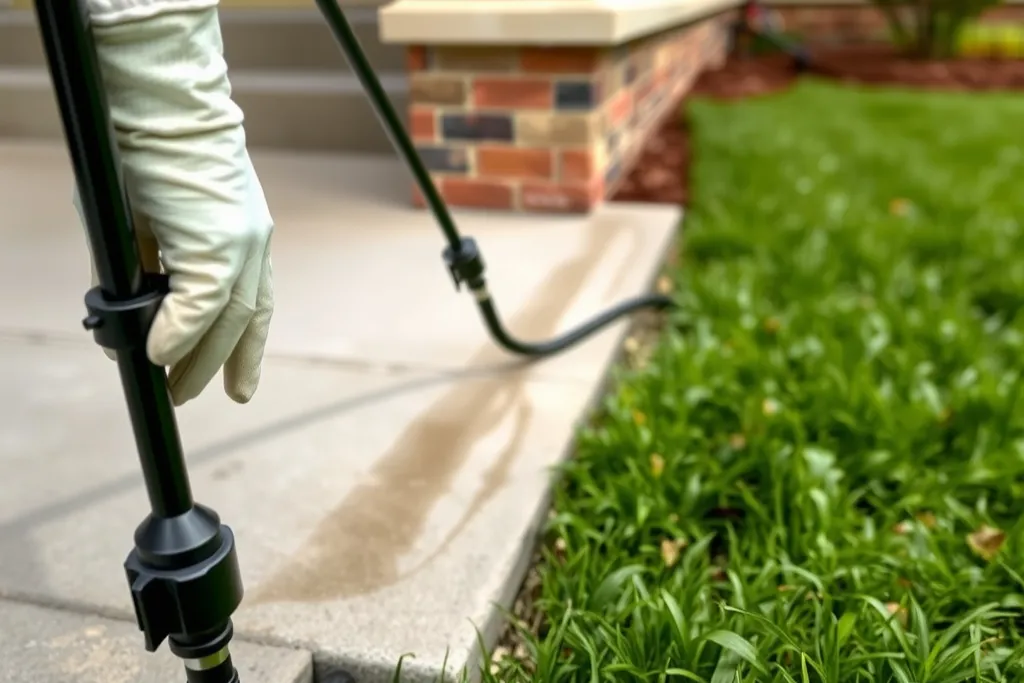
Do not layer store-bought sprays on top of a professional treatment: repellent sprays can drive insects into wall voids and make baits stop working. Keep children and pets away from treated surfaces until they are dry.
We ask where you see pests, inspect inside and out, including slab edges, weep holes and utility lines, and explain each option and its price before anything is applied.
We point out gaps under doors, unsealed pipe penetrations and torn screens, and seal small openings on the spot where practical.
Inside, we use baits, wall-void dusts and crack-and-crevice applications where insects hide, rather than broadcast spraying across floors.
Outside, a labeled residual product goes around the foundation, doors, windows and eaves, and reachable webs are swept down.
Your report lists what we found, what we applied and where, plus any pet or family precautions. Quarterly plans repeat the exterior work each season.
Best for a single flare-up, a move-in fresh start or a home you are preparing to sell. It covers inside and outside, but nothing stops new insects from moving in from the yard later.
A visit each season keeps a fresh barrier in place as pests shift with the weather: ants in spring, roaches in summer heat and storms, spiders and crickets in fall.
General pest pricing depends on home size, how many pest types are involved and whether you want a single visit or a plan. Our pest control cost guide for Magnolia explains each line in more detail.
| Job | Typical range | What it includes |
|---|---|---|
| One-time general pest treatment (inside + outside) | $175–$300 | single visit, no ongoing plan |
| Initial service to start a quarterly plan | $150–$250 | full inspection and a heavier first treatment |
| Quarterly general pest plan (per visit) | $95–$150 | exterior barrier refreshed each season |
| Spider or scorpion treatment | $150–$300 | heavy spider or striped bark scorpion activity |
Typical Montgomery County ranges for 2026. The technician confirms your exact price after the inspection and before any product goes down.
Call any hour and explain what is going on. You get a clear price before any work starts.
Magnolia sits in southern Montgomery County, where pine and oak woodland meets fast-growing subdivisions. Lots that back onto greenbelts or the Spring Creek and Lake Creek bottoms tend to see more spiders, roaches and ants simply because there is more leaf litter, rotting wood and moisture next door.
Weather drives most calls. Around 50 inches of rain a year and long, humid summers keep insects active almost year-round, and storms like Harvey in 2017 and Beryl in 2024 showed how saturated ground pushes pests toward dry foundations. A hard freeze like Winter Storm Uri in 2021 can also send them indoors in a hurry.
Housing matters too. New slab-on-grade homes in communities such as Audubon, near FM 1488 and SH 249, often come with fresh landscaping and irrigation that invite ants and earwigs, while older houses near the historic downtown tend to have more gaps around doors, siding and plumbing that need sealing.
Inspections, liquid soil treatments, bait systems and WDI reports for subterranean termites in slab and pier-and-beam homes.
Targeted cockroach treatment for palmetto bugs, smokybrown roaches and German cockroach infestations in kitchens and baths.
Identification-first spider control for garages, attics, eaves and living areas, with web removal and fewer insects for spiders to eat.
Inspection, trapping and entry-point sealing that removes rats and mice from attics, walls and garages and keeps them out.
Not sure if you're covered? Check your ZIP code.
In Magnolia, a one-time inside-and-outside pest treatment typically costs $175–$300.
In Magnolia, pests follow the weather.
In Southeast Texas, native (Eastern) subterranean termites swarm in daylight on warm days from late winter through spring, often after rain.
Fire ants don't multiply after rain; they move.
Striped bark scorpions and brown recluse spiders both thrive on the pine and oak lots around Magnolia, hiding in loose bark, firewood, garage clutter and attic insulation.
Light rain after a product has dried does little harm, because labeled residual products bind to surfaces once dry. A downpour right after application can reduce results, so visits are often moved when heavy storms are forecast.
For a week or two after service, it is common to see insects that are slowed or dying as they cross treated areas. That usually means the treatment is working. If live activity continues after about two weeks, call so we can look at what is sustaining it.
Empty rooms are the easiest time to treat cabinets, baths and garage voids. It is also a good moment to ask the builder what termite pretreatment, if any, was done and to file that paperwork with your closing documents.
Keep mulch and soil a few inches below the top of the slab, trim shrubs so they do not touch the walls, and store firewood away from the house. Fix leaks under sinks and around AC condensate lines, since moisture draws roaches, silverfish and ants.
Products are applied according to their labels, which set where they may be used and when people and pets can return. Your technician explains the precautions for your home, such as keeping cats off treated surfaces until dry or moving food bowls during an interior service.